Please ensure Javascript is enabled for purposes of website accessibility

US appeals court rules Trump cannot implement mail-in voting order

Summary: 1st Circuit Court issues 2-1 ruling Judge Indira Talwani's injunction upheld Trump's order challenged by coalition of 23 states A federal appeals court on July 25 declined to allow U.S. President Donald Trump's administration to implement in 23 states his executive order that aims to tighten rules for mail-in voting ahead of November elections that will decide control of Congress. The Boston-based 1st U.S. Circuit Court of Appeals rejected the administration's request to lift an injunction several Democratic-led states secured on June 25 from a lower-court judge who concluded that key parts of the Republican president's order were unconstitutional. In asking the court to pause U.S. District Judge Indira Talwani's ruling while it pursues an appeal, the U.S. Department of Justice had argued that because government agencies had yet to finalize actions and policies to implement Trump's directive, any lawsuit challenging his order was premature. The appeals court, in a 2-1 ruling, rejected that argument. "As the district court reasoned, the (executive order) lays out a clear set of rapidly approaching deadlines by which states must coordinate with federal officials and comply with new voting procedures — all while the states must also ensure that their officials and the public understand the evolving set of rules that would govern the upcoming September and November elections," the judges wrote. "The Plaintiff States have no practical choice but to respond to the (order) now." Before Talwani ruled, a federal judge in Washington, D.C., rejected a related effort by Democrats to block Trump's order on similar grounds. The Justice Department warned that absent a ruling in its favor from the 1st Circuit, it may be forced to ask the U.S. Supreme Court to intervene. Trump signed the executive order in March after years of calling for tighter rules on voting by mail and pushing the false claim that his 2020 election defeat was the result of widespread voter fraud. Under the U.S. Constitution, states are assigned the role of administering federal elections. That order came on top of other efforts by Trump to overhaul elections. He has made winning approval in Congress of a divisive package of voting restrictions called the SAVE America Act a priority. Judges have blocked an earlier executive order he signed requiring proof of citizenship to register to vote and restricting the counting of mail ballots. But Talwani, in siding with a coalition of 23 states and the District of Columbia that was led by California, Massachusetts, Nevada and Washington state, said the president lacked any authority to direct DHS to compile voter eligibility lists for each state to use and that USPS had no statutory authorization to adopt any binding regulations on mail-in voting. The judge said Trump also could not attempt through his order "to intimidate local election officials to use the necessarily incomplete confirmed citizenship lists as a resource, lest they face criminal prosecution."

Michigan couple sues Taylor Farms, Taco Bell after getting cyclosporiasis

Summary: Lawsuit filed in U.S. District Court for the Eastern District of Michigan Plaintiffs seek at least $75,000 in damages and attorney fees Taylor Farms issued voluntary recall of iceberg lettuce on July 17 A Michigan couple has sued Taco Bell and Taylor Farms in federal court after they recently contracted cyclosporiasis, alleging the companies are responsible for them contracting the parasitic illness after eating shredded iceberg lettuce from a restaurant location in Durand. Cyclosporiasis is a parasitic illness. The most common symptom is frequent, watery and explosive diarrhea. The infections have been linked to iceberg lettuce in five states, according to the Centers for Disease Control and Prevention. The lawsuit, filed July 17 in the U.S. District Court for the Eastern District of Michigan, accuses Taylor Farms of not taking adequate food safety steps to prevent contamination by fecal matter that can lead to Cyclospora contamination. The company also should have known about the risk because of a 2013 Cyclospora outbreak and a 2024 E. coli outbreak, both associated with Taylor Farms produce, the case claims. The plaintiffs are residents of Durand, in Shiawassee County, according to the lawsuit. The complaint alleges Taco Bell also bears responsibility for the illnesses because the company has control over the restaurant's food safety standards, including how it is stored and prepared, and suppliers it uses. The filing also accuses Taco Bell of continuing to sell contaminated produce until the company removed iceberg lettuce from some restaurants during investigation of the Cyclospora outbreak. Taylor Farms issued a voluntary recall July 17 of iceberg lettuce products. Ryan Osterholm, a partner at the Minnesota-based firm OFT representing the plaintiffs, said the goal of the litigation is to help shed light on how this outbreak unfolded to reduce the chance another will happen. He said his firm represents more than 100 clients in Michigan who have gotten sick with cyclosporiasis, though lawsuits have not been filed in all those instances. Cases have now been reported in 70 of Michigan's 82 counties, the state health department said. Officials said the state's total number of cyclosporiasis cases had reached more than 7,600 by Thursday. Michigan and Ohio appear to be leading the national outbreak, according to the Centers for Disease Control and Prevention, which said earlier this week has received reports of more than 4,100 lab-confirmed cases of the illness and knows of more than 7,400 cases that are not lab-confirmed. The case asks for damages of at least $75,000 and other costs, interest and attorney fees. The lawsuit does not say whether the plaintiffs may have eaten lettuce from other sources that also use Taylor Farms as a supplier. The U.S. Food and Drug Administration said as of July 19, the agency had not confirmed any positive results for samples of Taylor Farms lettuce tested for Cyclospora. An earlier test sample had yielded a false positive result, according to the USDA.

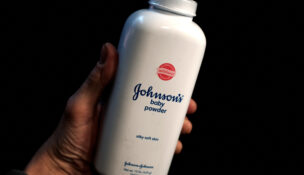
US judge casts doubt on 69,000 cases alleging J&J talc caused cancer

Summary: Judge Rukhsanah Singh questions plaintiffs' expert evidence Approximately 69,000 cases consolidated in New Jersey federal court J&J denies talc caused ovarian cancer, stopped U.S. sales in 2020   A federal judge cast doubt on July 22 on claims by approximately 69,000 people alleging that Johnson & Johnson's baby powder and other talc products caused ovarian cancer, saying plaintiffs must provide more specific evidence or risk having their lawsuits dismissed. U.S. Magistrate Judge Rukhsanah Singh in Trenton, New Jersey, said that recent testimony by two of the plaintiffs' experts raised doubts about whether any plaintiffs can provide evidence admissible in court "that talcum powder use specifically caused her ovarian cancer." The two experts, Judith Wolf and Daniel Clarke-Pearson, testified in May in preparation for a set of six "bellwether," or test, trials for the thousands of cases that have been consolidated in New Jersey's federal court. Verdicts in bellwether trials are used to assess the potential value of remaining claims and guide settlement talks. J&J has denied the allegations that its talc products caused cancer, saying that talc was safe and did not contain asbestos. A spokesperson for the company did not immediately respond to a request for comment, nor did a lead attorney for the plaintiffs. Wolf and Clarke-Pearson said they could not completely rule out other possible causes of the plaintiffs' ovarian cancer, according to Singh's opinion. "If such uncertainty is indeed reality, then how can any plaintiff here meet her burden on the merits of her claim?" Singh wrote. Singh said that the debate over causation would not lead to "instant dismissal" of the thousands of cases in the consolidated federal litigation. The judge ordered plaintiffs to respond by Nov. 19, and to explain why their case should not be dismissed over the failure to provide an admissible expert opinion that J&J talc caused their specific cancer. In addition to the consolidated federal court cases, J&J also faces lawsuits in state courts around the U.S. J&J has won some of the recent trials in state courts, but juries ⁠have awarded large verdicts for plaintiffs in other cases. The litigation resumed in March 2025, after being put on hold for more than three years during J&J's repeated failed attempts to resolve the lawsuits through a shell company's bankruptcy. J&J stopped selling talc-based baby powder in the U.S. in 2020, switching to a cornstarch product.